Skip to content
Free UK delivery Subscribe & save 10% Order by 2:30pm for same-day dispatch Made in the UK 4.8 stars on Trustpilot Third party tested Free UK delivery Subscribe & save 10% Order by 2:30pm for same-day dispatch Made in the UK 4.8 stars on Trustpilot Third party tested

Cart

Your cart is empty

The science

Every ingredient earns its place.

We don't dose for the label. Here's what's actually in every Hustle bar, why it's there, and the research behind every gram.

Protein

Think of protein as the body's repair crew.

18g per bar

Every time you train, work hard, or just get through a demanding day, your body breaks down and rebuilds tissue. Protein is what makes that rebuilding possible.

It does more than build muscle though. Protein is broken down into amino acids, which your brain uses to produce chemicals like serotonin and dopamine, the ones that control your mood, focus, and motivation. Not enough protein and those systems start to struggle. You feel it mentally before you even notice it physically.

A major review of studies published in the British Journal of Sports Medicine confirmed that consistent protein intake leads to meaningful improvements in both muscle strength and size. Separately, research shows that amino acid availability directly influences how well your brain produces the neurotransmitters it needs to keep you sharp, balanced, and driven throughout the day.

We put 18g in every bar because that's the amount research consistently identifies as the threshold for muscle protein synthesis. The dose that actually makes a difference.

Sources & studies
  1. Morton, R.W. et al. (2018). British Journal of Sports Medicine. https://bjsm.bmj.com/content/52/6/376
  2. Lonnie, M. et al. (2018). Nutrients. https://www.mdpi.com/2072-6643/10/3/360
Protein

Creatine

Your body already makes creatine.

5g per bar

It lives in your muscles and your brain, and its job is to keep your energy topped up when you need it most.

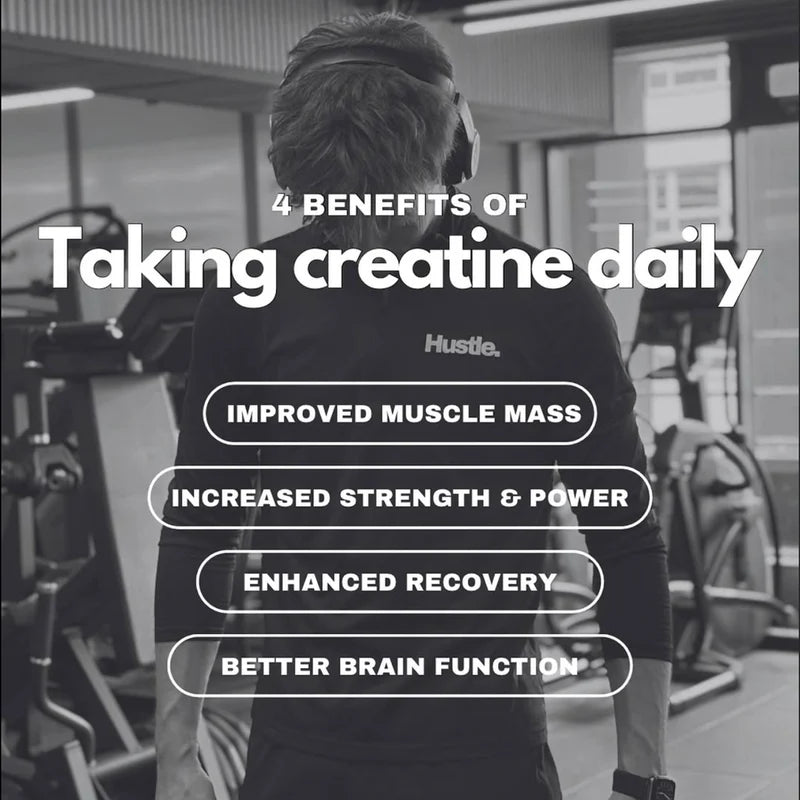
Here is how it works. Your body runs on a molecule called ATP, which is essentially cellular fuel. When you train hard or think hard, ATP burns through fast. Creatine helps regenerate it rapidly, so your muscles and your brain can keep going. More creatine stored means more energy available, faster recovery, and sharper thinking under pressure.

A large review of 69 clinical trials confirmed that creatine monohydrate consistently improves strength, power output, and how quickly your body recovers after exercise. It also reduces creatine kinase, a key marker of muscle damage, in the hours after intense training. For the brain, a meta-analysis published in Nutrition Reviews found it measurably improves memory in healthy adults. A 2024 study found it helped people maintain cognitive performance even when sleep deprived, when the brain's energy demands are at their highest.

Most bars contain a token amount. We put in the full 5g clinical dose that the research actually points to.

Sources & studies
  1. Lanhers, C. et al. (2025). Nutrients. https://www.mdpi.com/2072-6643/17/17/2748
  2. Doma, K. et al. (2022). Sports Medicine. https://link.springer.com/article/10.1007/s40279-022-01640-z
  3. Prokopidis, K. et al. (2023). Nutrition Reviews. https://academic.oup.com/nutritionreviews/article/81/4/416/6671817
  4. Naber, M. et al. (2024). Scientific Reports. https://www.nature.com/articles/s41598-024-54249-9
Creatine

Sodium

Sodium doesn't get the credit it deserves.

Most people associate it with something to avoid rather than something their body genuinely needs. But sodium is an electrolyte, and electrolytes are the minerals that keep everything running smoothly, from your muscles contracting to your brain firing correctly.

Here is what is actually happening. Your brain and nervous system communicate through electrical signals. Sodium is one of the key minerals that carries those signals. When sodium levels drop too low, those signals slow down. Research from the University of Florida confirms that when sodium falls below optimal levels, people can experience confusion, weakness, and impaired cognitive function. The brain quite literally needs it to work properly.

For physical performance, the picture is equally clear. A 2024 review published in Applied Sciences found that electrolyte loss directly impairs exercise performance, with sodium being the primary electrolyte lost through sweat. Staying topped up supports muscle contraction, fluid retention, and the ability to maintain output during demanding sessions.

We use Himalayan Pink Salt as our sodium source because it is a natural, minimally processed form of the mineral. No shortcuts. Just what your body needs.

Sources & studies
  1. University of Florida, Fixel Institute for Neurological Diseases (2025). Why Sodium Matters for Brain Health. https://fixel.ufhealth.org/2025/05/20/why-sodium-matters-for-brain-health/
  2. Applied Sciences (2024). Importance of Electrolytes in Exercise Performance. https://www.mdpi.com/2076-3417/14/22/10103
Sodium

Vitamin A

Works quietly. Matters massively.

Vitamin A is one of those nutrients that works quietly in the background, keeping systems running that you only notice when they start to fail.

For the body, Vitamin A plays a central role in immune function, skin health, and cellular repair. It supports the normal growth and maintenance of most of your body's tissues, and it is essential for the health of your eyes, specifically in how they convert light into signals your brain can read.

For the brain, research is revealing just how important Vitamin A actually is. A 2023 study from the University of Aberdeen found that the brain actively regulates Vitamin A levels in the body, suggesting it plays a far more central role in brain function than previously understood. In the mature brain, Vitamin A contributes to synaptic plasticity, the process by which your brain forms and strengthens connections, which is fundamental to learning and memory. Research published in npj Science of Food found that adults with higher Vitamin A levels showed a meaningfully lower risk of mild cognitive impairment. Separately, Vitamin A deficiency has been linked to disruptions in biological rhythms, including sleep regulation, according to a 2022 review published in Frontiers in Nutrition.

It does a lot. Quietly, consistently, and every day.

Sources & studies
  1. Imoesi, P.I. et al. (2023). Control by the brain of vitamin A homeostasis. iScience. https://www.ncbi.nlm.nih.gov/pmc/articles/PMC10432198/
  2. Est, C.B. and Murphy, R.M. (2023). An in vitro model for vitamin A transport across the human blood-brain barrier. https://www.ncbi.nlm.nih.gov/pmc/articles/PMC10120720/
  3. Guo X. et al. (2022). Impacts of vitamin A deficiency on biological rhythms. Frontiers in Nutrition. https://www.frontiersin.org/journals/nutrition/articles/10.3389/fnut.2022.886244/full
  4. npj Science of Food (2025). Impact of vitamin A on aged people's cognition. https://www.nature.com/articles/s41538-025-00402-1
Vitamin A

Vitamin B6

Hardest working. Least talked about.

Vitamin B6 is one of the hardest working vitamins in the body, and one of the least talked about. Your body cannot make it on its own, which means every bit of it has to come from what you eat or drink.

For the body, B6 plays a direct role in how you produce energy from the food you eat. It is involved in protein metabolism, the creation of red blood cells, and helping your body make haemoglobin, the molecule that carries oxygen to your muscles and organs. Without enough of it, you feel it. Fatigue, weakness, and reduced physical capacity are among the first signs of deficiency.

For the brain, B6 is essential for the production of some of the most important chemicals in your nervous system. It acts as a cofactor in the creation of serotonin, dopamine, and GABA, the neurotransmitters that regulate your mood, motivation, focus, and ability to stay calm under pressure. A 2022 clinical trial from the University of Reading found that participants who took Vitamin B6 reported feeling significantly less anxious and less depressed after just one month. A 2024 study published in Translational Psychiatry confirmed that B6 deficiency directly impairs cognitive function and disrupts the very systems that keep your mind balanced and sharp.

Keeping B6 levels consistent is not a performance hack. It is basic maintenance for a functioning brain and body.

Sources & studies
  1. University of Reading (2022). Vitamin B6 supplements could reduce anxiety and depression. ScienceDaily. https://www.sciencedaily.com/releases/2022/07/220719091209.htm
  2. Translational Psychiatry (2024). Vitamin B6 deficiency hyperactivates the noradrenergic system. https://www.nature.com/articles/s41398-021-01381-z
  3. eLife (2024). Vitamin B6 and the brain. https://elifesciences.org/digests/93094/vitamin-b6-and-the-brain
Vitamin B6

Vitamin B12

Possibly the most important vitamin for your brain.

B12 might be the single most important vitamin for keeping your brain and nervous system running properly. And yet it is one of the most common deficiencies in the world, particularly among people who eat less meat or follow a plant-based diet.

For the body, B12 is essential for red blood cell formation, DNA synthesis, and the maintenance of the myelin sheath, the protective coating around your nerve fibres that allows signals to travel quickly and accurately throughout your body. When B12 is low, those signals slow down. You feel it as fatigue, brain fog, and a general sense of running below capacity.

For the brain, the research is compelling. A 2024 systematic review published in ScienceDirect found that B12 plays a critical role in neurological and metabolic health, with deficiency linked directly to impaired cognitive function, increased risk of depression, and accelerated decline in brain health. A 2023 study found that patients with cognitive impairment who received B12 supplementation showed significant improvements in cognitive assessment scores after just six months. Research also shows that B12 works alongside folic acid to regulate homocysteine levels in the blood, and elevated homocysteine is one of the most consistently identified risk factors for cognitive decline and poor brain health over time.

If your body is not getting enough B12, very little else works as well as it should.

Sources & studies
  1. ScienceDirect (2024). Vitamin B12: A cornerstone of cognitive and metabolic well-being in young adults. https://www.sciencedirect.com/science/article/abs/pii/S2451847624000344
  2. International Journal of Molecular Sciences (2024). Vitamin B12 Deficiency and the Nervous System. https://www.mdpi.com/1422-0067/25/1/590
  3. Nutraceutical Business Review (2024). Vitamin B12 and brain health. https://nutraceuticalbusinessreview.com/vitamin-b12-brain-cognitive-health-what-we-know-part-I
Vitamin B12

Vitamin C

Not just for colds.

Most people know Vitamin C as the thing you take when you feel a cold coming on. That is true, but it is only a fraction of what this vitamin actually does.

For the body, Vitamin C is one of the most powerful antioxidants your body has access to. It neutralises free radicals, the unstable molecules that cause cellular damage after intense physical exertion. This is particularly relevant for anyone training hard, because exercise naturally increases oxidative stress in the body. Vitamin C helps mop that up. It also plays a direct role in the synthesis of collagen, which is the structural protein that holds your connective tissue, joints, and skin together. Without it, your ability to repair and maintain those structures deteriorates.

For the brain, the evidence is compelling and often overlooked. A 2022 study published in the European Journal of Nutrition found that nearly half of young adults aged 20 to 39 had inadequate Vitamin C levels, and that supplementing with it produced significant improvements in what researchers called mental vitality. A cross-sectional study analysing data from older adults in the US found that those with the highest Vitamin C intake performed meaningfully better on cognitive function tests compared to those with the lowest intake. Research published in Antioxidants in 2023 found that Vitamin C plays an active role in brain signalling, helping regulate the neurotransmitter systems that keep your mind sharp and your mood stable.

It is not just immune support. It is brain support too.

Sources & studies
  1. Sim, M. et al. (2022). Vitamin C supplementation promotes mental vitality in healthy young adults. European Journal of Nutrition. https://www.ncbi.nlm.nih.gov/pmc/articles/PMC8783887/
  2. He, X. et al. (2025). Vitamin C intake and cognitive function in older US adults. Frontiers in Nutrition. https://www.ncbi.nlm.nih.gov/pmc/articles/PMC12173858/
  3. Zylinska, L. et al. (2023). Vitamin C Modes of Action in Calcium-Involved Signaling in the Brain. Antioxidants. https://www.mdpi.com/2076-3921/12/2/231
Vitamin C

Vitamin D

The sunshine vitamin. And so much more.

Vitamin D is often called the sunshine vitamin, and for good reason. Your body produces it when your skin is exposed to sunlight. The problem is that most of us, particularly in the UK, simply do not get enough sun for our bodies to make adequate amounts. Deficiency is extremely common, and the consequences go well beyond weak bones.

For the body, Vitamin D is essential for calcium absorption, immune function, and muscle health. Research consistently shows that low Vitamin D is linked to reduced muscle strength and increased injury risk, both of which matter enormously if you are training or simply trying to stay physically capable. It plays a role in regulating inflammation too, which is fundamental to how well your body recovers after physical stress.

For the brain, a landmark 2022 study published in Alzheimer's and Dementia found that people with higher levels of Vitamin D in their brain tissue had significantly better cognitive function and less neuropathological damage. A large scale study using data from over 427,000 participants in the UK Biobank found that higher Vitamin D levels were associated with a meaningfully lower risk of dementia and stroke. A 2025 review published in Frontiers in Nutrition found that higher dietary Vitamin D intake is associated with better brain function and mental health in older adults. Research published in Nutrients in 2025 also found that Vitamin D supplementation increased levels of BDNF, a protein your brain uses to grow and maintain nerve cells, which is directly linked to memory and learning.

Most people are deficient and most people do not know it. We made sure it is in every bar.

Sources & studies
  1. Shea, K. et al. (2022). Brain Vitamin D Forms, Cognitive Decline and Neuropathology. Alzheimer's and Dementia. https://alz-journals.onlinelibrary.wiley.com/doi/10.1002/alz.12836
  2. Navale, S.S. et al. (2022). Vitamin D and brain health: an observational and Mendelian randomization study. American Journal of Clinical Nutrition. https://pmc.ncbi.nlm.nih.gov/articles/PMC9348994/
  3. Frontiers in Nutrition (2025). Higher dietary vitamin D intake influences brain and mental function. https://www.frontiersin.org/journals/nutrition/articles/10.3389/fnut.2025.1564568/full
  4. Nutrients (2025). Impact of Vitamin D Status and Supplementation on Brain-Derived Neurotrophic Factor. https://www.mdpi.com/2072-6643/17/16/2655
Vitamin D

Iron

When iron drops, everything slows down.

Iron is the mineral most people associate with tiredness. And they are right to, because when iron levels drop, fatigue is one of the first things you notice. But what is less commonly understood is just how directly iron affects the way your brain works, not just how tired your body feels.

Here is what iron actually does. It is essential for producing haemoglobin, the protein in your red blood cells that carries oxygen from your lungs to every tissue in your body, including your brain. Without enough iron, your blood carries less oxygen, your muscles work harder for the same output, and your brain gets less of the fuel it runs on.

For physical performance, iron deficiency is one of the most common and most underdiagnosed causes of reduced exercise capacity. Research consistently shows that even iron deficiency without full anaemia results in reduced endurance, increased fatigue during exercise, and slower recovery.

For the brain, the evidence is equally strong. A 2024 study published in Nutrients found that iron levels had a direct and measurable impact on cognitive function in university students during periods of high mental demand, with higher iron intake linked to better attention, concentration, and overall performance. A major meta-analysis published in PLOS ONE found that iron supplementation significantly improved intelligence, attention, and memory across multiple trials. Research published in ScienceDirect in 2025 found that iron deficiency, even without anaemia, is consistently associated with depressive symptoms, difficulty concentrating, and cognitive impairment.

Iron deficiency is the most common nutritional deficiency in the world. We made sure it is covered.

Sources & studies
  1. Nutrients (2024). Impact of Iron Intake and Reserves on Cognitive Function in Young University Students. https://www.mdpi.com/2072-6643/16/16/2808
  2. PLOS ONE (2023). Effects of iron supplementation on cognitive development in school-age children. https://journals.plos.org/plosone/article?id=10.1371/journal.pone.0287703
  3. ScienceDirect (2025). Psychiatric and cognitive outcomes of iron supplementation. https://www.sciencedirect.com/science/article/abs/pii/S0149763425003732
Iron

Zinc

Over 300 enzymatic processes. Quietly running you.

Zinc does not get nearly enough attention. It is involved in over 300 enzymatic processes in the body, and a significant proportion of your body's zinc is concentrated directly in the brain, particularly in the regions responsible for memory and emotional regulation.

For the body, zinc is fundamental to immune function, wound healing, protein synthesis, and hormone regulation, including testosterone. It plays a role in how efficiently your body manages inflammation and recovers from physical stress. Low zinc is consistently linked to increased susceptibility to illness, slower recovery, and reduced physical resilience.

For the brain, zinc is one of the most abundant minerals in the central nervous system, where it acts as a regulator of neurotransmitters including glutamate, GABA, serotonin, and dopamine, the chemicals that govern how well you learn, how sharp your memory is, and how stable your mood feels. A 2023 study published in Biomolecules confirmed that zinc promotes antioxidant effects, neurogenesis, and immune responses within the brain, and that deficiency leads directly to declines in cognition, learning, and increased oxidative stress. A 2024 review published in Frontiers in Biophysics found that zinc plays a central role in cognitive function and that disruptions to zinc balance in the brain are implicated in depression, anxiety, and neurodegenerative conditions. Research published in Scientific Reports in 2023 found that zinc supplementation improved cognitive biomarkers and brain-derived neurotrophic factor levels, a key marker of brain plasticity and memory function.

Quiet, essential, and working in the background every single day.

Sources & studies
  1. Biomolecules (2023). The Important Role of Zinc in Neurological Diseases. https://www.mdpi.com/2218-273X/13/1/28
  2. Frontiers in Biophysics (2024). Unlocking the brain's zinc code. https://www.frontiersin.org/journals/biophysics/articles/10.3389/frbis.2024.1406868/full
  3. Scientific Reports (2023). Ameliorative effects of zinc supplementation on cognitive function. https://www.nature.com/articles/s41598-023-31781-8
Zinc

Folic acid

One of the quietest heroes in the blend.

Folic acid does not get talked about enough outside of pregnancy. That is a shame, because it is one of the most important nutrients for keeping your brain functioning properly at any stage of life.

Folic acid is the synthetic form of folate, a B vitamin that plays a central role in DNA synthesis, cell repair, and the production of neurotransmitters. It also works directly alongside Vitamin B12 to regulate homocysteine levels in the blood. Elevated homocysteine is one of the most consistently identified markers for cognitive decline and poor brain health, and folic acid helps keep it in check.

For the body, folic acid supports red blood cell formation, energy metabolism, and the maintenance of healthy tissue. It is particularly important for anyone under sustained physical or mental load, as both types of demand increase cellular turnover and the need for repair.

For the brain, a 2024 systematic review published in Archives of Gerontology and Geriatrics found that folic acid supplementation improved cognitive function by reducing inflammatory markers in the brain, with significant improvements in memory, attention, and overall intelligence scores in adults with mild cognitive impairment. Research published in ScienceDirect found that low folate concentrations are associated with a nearly 90% higher risk of dementia compared to normal concentrations. A 2023 study found that dietary folic acid supplementation helped prevent hippocampal atrophy and improved brain glucose uptake, directly protecting the memory and learning centres of the brain from age-related decline.

One of the quieter heroes in the blend. Working in the background every single day.

Sources & studies
  1. Archives of Gerontology and Geriatrics (2024). Effects of folic acid supplementation on cognitive function and inflammation. https://www.sciencedirect.com/science/article/abs/pii/S0167494324002164
  2. ScienceDirect (2023). Long-term dietary folic acid supplementation attenuated aging-induced hippocampus atrophy. https://www.sciencedirect.com/science/article/abs/pii/S095528632300061X
  3. Scientific Reports. Folic acid supplementation improves cognitive function. https://www.nature.com/articles/srep37486
Folic acid

Gluten free

Less inflammation. Clearer thinking.

Hustle Bar contains no gluten. For some people, that is a medical necessity. For many others, it is simply a cleaner way to eat.

Gluten is a protein found in wheat, barley, and rye. For people with coeliac disease, it triggers a serious immune response that damages the gut lining and impairs nutrient absorption across the board. But the conversation around gluten has expanded significantly in recent years, and research is beginning to explain why.

The gut and the brain are in constant two-way communication through what scientists call the gut-brain axis. A 2024 study from McMaster University published in Gastroenterology found that the gut lining is not a passive barrier but an active participant in the immune response, and that gluten peptides can trigger inflammatory cascades that extend well beyond the digestive system. Research published in a peer-reviewed journal found that for people with gluten sensitivity, a gluten-free diet measurably lowered oxidative stress and improved both gastrointestinal and psychological symptoms over a five-week period.

The connection between gut inflammation and brain function is now well established. Reducing unnecessary inflammatory triggers in the gut is one of the most direct ways to support clearer thinking, more stable energy, and better overall physical resilience.

We made Hustle Bar gluten free because we think everyone deserves a bar that does not work against them.

Sources & studies
  1. McMaster University, Gastroenterology (2024), reported via FoodNavigator. https://www.foodnavigator-usa.com/Article/2025/05/09/how-science-superfoods-are-driving-the-gluten-free-future/
  2. ScienceDirect (2024). Pilot study indicates that a gluten-free diet lowers oxidative stress. https://www.sciencedirect.com/science/article/abs/pii/S0920996424001828
  3. PMC (2024). Gut-Brain Axis: Investigating the Effects of Gut Health on Cognitive Functioning. https://www.ncbi.nlm.nih.gov/pmc/articles/PMC11315957/
Gluten free

High fibre

For your gut. and your brain.

Fibre is one of the most underappreciated nutrients in modern nutrition. Most people know it is good for digestion. Fewer people know just how directly it affects the way your brain works.

The source of fibre in Hustle Bar is chicory root, a natural prebiotic fibre. Prebiotic fibres feed the beneficial bacteria in your gut, helping them thrive and produce short-chain fatty acids (SCFAs), molecules that play a direct role in regulating inflammation, energy metabolism, and brain function.

The gut-brain axis is the bidirectional communication network between your gastrointestinal system and your central nervous system. Research published in Gut Microbiome found that fibres which increase SCFA production are among the most powerful dietary tools for influencing cognitive and emotional function. Fibre-induced changes in the gut microbiota have been shown to increase levels of BDNF, the brain-derived neurotrophic factor that your brain uses to grow, maintain, and strengthen neural connections. A 2024 comprehensive review found that high-fibre diets enhance beneficial gut bacteria while fibre-deprived diets correlate with cognitive decline and damage to hippocampal synapses, the structures your brain uses for memory and learning. Research published in American Journal of Medicine found that dietary fibre intake is directly associated with better cognitive function in older adults.

What you feed your gut, you feed your brain. Every bar delivers a meaningful contribution to both.

Sources & studies
  1. Cambridge Core. Dietary fibre and the gut-brain axis. https://www.cambridge.org/core/journals/gut-microbiome/article/dietary-fibre-and-the-gutbrain-axis-microbiotadependent-and-independent-mechanisms-of-action/3844C700341E536779F0E35042B5F7AE
  2. PMC (2024). The Impact of Diet and Gut Microbiota on Cognitive Health. https://www.ncbi.nlm.nih.gov/pmc/articles/PMC12725045/
  3. Prokopidis, K. et al. (2022). Dietary fiber intake is associated with cognitive function in older adults. American Journal of Medicine. https://www.ajmed.com/article/S0002-9343(22)00247-3/abstract
High fibre

No sweeteners

Sweetness from fruit, not chemistry.

Most protein bars on the market use artificial sweeteners. Sucralose, acesulfame K, aspartame. They keep the calorie count down and the taste up. The problem is that the research on what they do to your body is not particularly reassuring.

Hustle Bar gets its sweetness from grape juice concentrate and rice syrup. Natural sources, nothing synthetic.

Here is why that matters. A landmark 2022 study published in Cell involving 120 healthy adults found that even at doses well below acceptable daily limits, artificial sweeteners significantly altered the composition of gut microbiota and disrupted blood sugar regulation within just two weeks. A 2025 study published in Frontiers in Microbiology found that synthetic sweeteners like sucralose and saccharin significantly reduced microbial diversity in the gut, and that sucralose specifically promoted the growth of pathogenic bacteria. Research published in PMC in 2025 found that artificial sweeteners disrupt the gut-brain axis by rewiring the microbiota and interfering with the reward and satiety pathways in the brain, which can affect appetite regulation, mood, and energy balance.

Your gut microbiome is one of the most important systems in your body. What you put in it shapes how you feel, how you think, and how you perform. We chose not to compromise that.

Sources & studies
  1. Cell (2022). Personalized microbiome-driven effects of non-nutritive sweeteners on human glucose tolerance. https://www.alzdiscovery.org/cognitive-vitality/blog/are-artificial-sweeteners-bad-for-the-brain
  2. Frontiers in Microbiology (2025). Synthetic vs. non-synthetic sweeteners. https://www.frontiersin.org/journals/microbiology/articles/10.3389/fmicb.2025.1531131/full
  3. PMC (2025). Disrupting the Gut-Brain Axis: How Artificial Sweeteners Rewire Microbiota and Reward Pathways. https://pmc.ncbi.nlm.nih.gov/articles/PMC12564633/
No sweeteners

Plant-based

100% plant-based, by design.

Hustle Bar is 100% plant based. We did not make it vegan to follow a trend. We made it vegan because it meant we could build something that works for more people, without compromising on what is inside.

Plant-based nutrition has been studied extensively in recent years, and the picture that is emerging is nuanced and interesting. A comprehensive systematic review published in ScienceDirect in 2025 found that components of plant-based diets are associated with lower levels of inflammatory markers and oxidative stress, both of which are directly linked to long-term brain health and reduced risk of neurodegenerative conditions. Research published in Nutrients in 2025 found that well-planned plant-based diets, particularly those rich in phytonutrients and antioxidants, are associated with protective effects against cognitive decline and systemic inflammation.

The key phrase in both of those findings is well-planned. A plant-based diet that does not address protein, B12, iron, zinc, and folic acid can leave gaps that show up as fatigue, brain fog, and reduced physical performance. That is exactly why we built Hustle Bar the way we did. Eighteen grams of protein, B12, iron, zinc, folic acid, and a full vitamin blend. Everything a plant-based diet can sometimes fall short on, covered in a single bar.

Whether you eat entirely plant-based or not, Hustle Bar is built to perform.

Sources & studies
  1. ScienceDirect (2025). From plate to brain: benefits, deficiencies, and research needs of plant-based diets. https://www.sciencedirect.com/science/article/abs/pii/S0306452225009194
  2. Nutrients (2025). Impact of Vegan and Vegetarian Diets on Neurological Health. https://www.mdpi.com/2072-6643/17/5/884
Plant-based

Now you know what's inside.

One bar a day. Everything you already take, in a bar you'll actually want to eat.

Shop Hustle Bars